Darwin Awards: Experiments in Living or Just Dying?
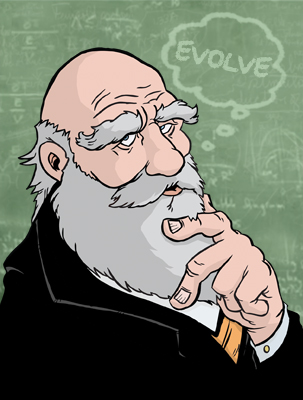 There are five criteria that must be met in order for individuals and their acts to be considered worth of the Darwin Award:
- Reproduction: an individual must be taken out from the gene pool
- Excellence: going above and beyond a degree of poor judgement that most individuals with common sense would scoff at
- Self-selection: whatever befell the individual must have happened of their own accord
- Maturity: the lack thereof
- Veracity: the incident and the individual must be true and not an urban myth or exaggeration
For example, the story of Lidia, the biology teacher who was inappropriately disposing of chemicals:

"As it turns out, a good idea it definitely was not. The cocktail of flammable substances in the enclosed space of the sewer caused an explosion so powerful that it launched the manhole cover into the air, decapitating the (briefly) surprised Lidia. Left without a head on her shoulders, she decided it was time to kick the bucket."Did Lidia fulfill the requirements to receive a Darwin Award?
- Reproduction: by killing herself, she certainly removed himself from the gene pool.
- Excellence: it is quite an amazing set of circumstances to kill yourself through chemically assisted manhole decapitation.
- Self-selection: pretty evident as she chose to pour chemicals down into the sewer
- Maturity: you would think that as a biology teacher, she would be aware of the proper procedures and outlets to dispose of potentially harmful chemicals.
- Veracity: verified!
So what does this have to do with Mill's concept of Experiments in Living? Well taking a look at Mill's philosophies, Mill would have advocated the freedom to do as one pleases without limiting the ability of other individuals to live their lives unimpeded. It is through continually exercising of freedom that humanity a whole improves; "human improvement requires 'freedom, and a variety of situations'" - Mill. From Mill's perspective, pursuing new experiences that are not necessarily guaranteed to result in some positive result are still beneficial to humanity as whole. Thus, Mill is concerned with the collective value of experiences, not just he individual value of experiences of which, any experience that results in winning a Darwin Award is certainly one of minimal individual value.
But, does Mill's conception of experiences resulting in beneficial knowledge for the whole of humanity fall in line with the premise of the Darwin Awards? Like I said, on an individual basis, most likely no. Many of the individuals who receive the Darwin Award do so posthumously; the individuals who survive their endeavors to speak of their experiences are far and few between amongst the Darwin Award winners. Furthermore, is the knowledge derived from these outlandish experiences valuable to society as a whole? This is debatable as the incidents and individuals that are eligible to be considered for the Darwin Award lack maturity and common sense. It is hard to argue that an individual who learns that pouring chemicals down into the sewers understands the gravity of the situation they are in due to a lack of maturity, foresight, and common sense, yet to most individuals who posses common sense will understand that Lidia's actions were not congruent with their own choices for what they would have done in that scenario, so any of the knowledge gleaned from her misfortune would have almost no value to the collective whole as a valuable lesson. Perhaps the value of their experiences is not evident to individuals who are fully functioning members of society but evident to young children whose view of the world is incomplete; their lives certainly have the capacity to be improved by instilling in them the smallest modicum of common sense from these stories of idiocy.
Source:
- darwinawards.com
- http://www.humboldtmfg.com/images/products/large/H-4911.050.jpg

Very entertaining post Mitchell. I agree with your take on Mill's description of the ideal individual: that these darwin award recipients do not qualify as they did not seek to cultivate themselves. However, if only to play devil's advocate, I will argue that darwin award recipients are in fact model examples of experiments in living. I would argue that these people's actions do result in beneficial (if not already obvious for most) knowledge for the whole of humanity, and that, especially in Darwin's view, by removing themselves from the gene pool, they benefit the population. So unless other people are harmed I would argue that Darwin Award recipients are successful experiments in living.
ReplyDelete