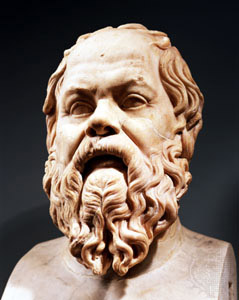
 The Gadfly
Rises
The Gadfly
Rises
As long as I can remember I have
been an enormous fan of Batman. As a kid I collected countless Batman action
figures. I had a bout every type of Batman they made along with Robin and all
of the major villains: the Joker, Riddler, Poison Ivy, Catwoman, Mr. Freeze,
Penguin, you name it I had it. I remember my favorite Christmas was when my dad
worked here at the hospital. He had to work on Christmas day so he woke me up
at four in the morning before he went in so that he could see my face when I
opened up a giant Bat Cave. For a Batman lover it was heaven.
So at this point, I am sure it is
very unclear how any part of my childhood obsession could relate to anything we
have learned this semester. Well, naturally, as the great Batman fan that I am,
I purchased The Dark Knight Rises when
it came out on DVD this Tuesday (a mere 21 days before Christmas). It took every ounce of self-control in my
being to finish my homework before watching the movie with my roommates. Part
of my homework that night was our reading Crito
by Plato. Consequentially, in the middle of the movie I found myself not
only in awe of the theatrical masterpiece, but also pondering Crito. In the movie, Alfred, the
longtime butler and caregiver for Bruce Wayne (aka Batman), tries his hardest
to convince Bruce to not fight as Batman anymore. He can see the immense power
of Bane (the newest villain attempting to off the Batman) and believes that an
attempt by Bruce to stop Bane would mean certain death. There are two main
points in the movie that Alfred begs Bruce not to fight anymore, to “run away”
from the fight if you will, and live a different life. Alfred tells Bruce that
he will not bury him, for he has buried too many Waynes as is (he served as a
butler to Bruce’s late parents as well). I couldn’t help but compare this
dialogue to Crito trying to convince Socrates to escape prison and his looming
execution.
One of Crito’s arguments to Socrates
is that if he were to die he would be abandoning his family, leaving his children
without a father. Although Bruce Wayne does not have children, Alfred does
plead that he not fight because he has cared for him since he was a child and
has lost all the other members of the Wayne family already (1:35 in the video above). Crito is hoping to
get Socrates to a safe and pleasant life in exile. In the movie, Alfred tells
Bruce Wayne of his dream, that one day he would see Bruce, retired and with a
wife, at his favorite cafe in Florence, Italy (1:10 in the video below). Socrates goes on to answer all
of Crito’s arguments. The first point Socrates makes is to not worry about
reputation. Batman has never worried about reputation. At the end of the
previous movie and the beginning of The
Dark Knight Rises, Batman takes just actions and does things that are good
for the community that compromise his popularity and find him on the Police’s
wanted list. Socrates also discusses his duty as a law-abiding citizen of
Athens and the idea of the social contract he is apart of. Socrates believes
that it is his duty to stay in jail because he has always upheld the social
contract of abiding by the laws, even if the law has falsely jailed him. To me
Batman embodies the idea of the social contract that Socrates believes in. Even
though Batman is weaker than he was in the last movie and facing a villain that
is more powerful than any villain he has ever fought, he knows that Gotham
needs him, even if it means sacrificing his life. The social contract is about
upholding the laws and doing your duty as a citizen even if it means
jeopardizing your reputation or even your life, and Batman complies with the
social contract in a way that would make Socrates proud.
One of Socrates most memorable
comments on the social contract comes from The
Apology, a piece we read earlier in the year. In The Apology Socrates calls himself a Gadfly, saying that he has
been given to the state by God and is “always fastening upon you, arousing and
persuading and reproaching you.” He is referring to the idea that the state can
become trapped in one way of thinking or stale and that he is the one always
causing people to think and be aware, so as to spare the state of bad policies.
Batman is a great representation of this Gadfly that Socrates speaks of. In the
second movie of the series Batman takes care of the Joker and saves Gotham, but
then goes into hiding when doing what is right caused the city to see him as a
villain. After seven years of seclusion, when the city becomes corrupt again
and a new villain appears, Batman comes back and fulfills his duty as the
Gadfly of Gotham City. Batman isn’t always active, but every time Gotham needs “arousing”
and “persuading”, Batman is there.

No comments:
Post a Comment