
“With regards to the young people, for instance, a forgiveness of college loan interest, was a big gift…Free contraceptives were very big with young college-aged women. And then, finally, Obamacare also made a difference for them, because as you know, anybody now 26 years of age and younger was now going to be part of their parents’ plan, and that was a big gift to young people. They turned out in large numbers, a larger share in this election even than in 2008 … You can imagine for somebody making $25,000 or $30,000 or $35,000 a year, being told you’re now going to get free health care, particularly if you don’t have it, getting free health care worth, what, $10,000 per family, in perpetuity, I mean, this is huge … Likewise with Hispanic voters, free health care was a big plus. But in addition with regards to Hispanic voters, the amnesty for children of illegals, the so-called Dream Act kids, was a huge plus for that voting group.”Governor Romney is essentially saying that the President won because he was able to entice or even "bribe" voters with programs just for them, i.e. Obamacare and the DREAM Act. While I found the comments to be slightly off-putting and dismissive of the actually need that millions of Americans have for healthcare and a decent education, I didn't really think about them in terms of political theory. John Avlon of the Daily Beast, however, makes an interesting point:
Addressing the needs and desires of people is not a bribe or a government gift to be exchanged for a vote. It is part of the purpose of representative government as conservative forefather Edmund Burke himself once envisioned: “Government is a contrivance of human wisdom to provide for human wants. Men have a right that these wants should be provided for by this wisdom.”
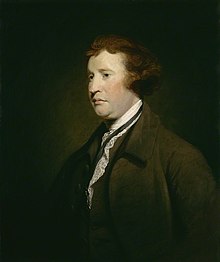
That the State ought to confine itself to what regards the State, or the creatures of the State, namely, the exterior establishment of its religion; its magistracy; its revenue; its military force by sea and land; the corporations that owe their existence to its fiat; in a word, to every thing that is truly and properly public, to the public peace, to the public safety, to the public order, to the public prosperity.It is certainly a debatable proposition, whether or not health insurance, educational assistance, and federal assistance to the poor are "truly and properly public," but they are certainly not explicitly enumerated among Burke's list of government responsibilities. However, if one digs a little deeper, clues can be found that point to where Burke may have stood on these issues. For one thing, Burke himself was an immigrant to England from Ireland, and throughout his service in the House of Commons, he was one of the few champions of the rights of the Irish. He supported an easing of the "penal laws," which attempted to force Catholics to convert to the Church of England. He also supported free trade with Ireland, and "Catholic Emancipation" within England, which was a process that removed many of the restrictions and stigmas against Catholics. It's not difficult to draw parallels between Irish Catholics in 18th Century England and undocumented immigrants in 21st Century America, and I would argue that it is no stretch to assume that Burke would have supported The DREAM Act, which simply offers the children of undocumented aliens the ability to claim residency status and receive in-state tuition at institutes of higher education.
Health Care Reform is a more complicated issue. The idea of "health insurance" didn't really exist until the 20th century, so there is relatively little evidence to draw from in Burke's own writing. Perhaps a very relevant excerpt can be found in Reflections on the Revolution in France, in which Burke pens this:
They have a right to ... the nourishment and improvement of their offspring, to instruction in life, and to consolation in death ... and he has a right to a fair portion of all which society, with all its combinations of skill and force, can do in his favour.In today's world of high health care costs, many families are unable to pay the price of seeing a doctor, whether for themselves or for their children. I would assert that this is a violation of their right to "nourishment and improvement of their offspring." Although it seems absurd to draw inferences without Burke having known the context of our modern political debates, it seems that the core of Burke's principles were that government should help people, albeit within the reasonable confines of respecting free trade and individual liberty, as well as religion and tradition. It seems to me that Edmund Burke would indeed beg to differ with Mitt Romney, and his opposition to Obamacare and the DREAM Act. Despite being a conservative, Burke, unlike Romney, did not believe that government should not lend a helping hand to those who cannot help themselves. -Ryne Menhennick

No comments:
Post a Comment