As a little kid, my
mom always told me these words, “There are three sides to every story- his,
hers, and the truth.” I never really
understood it as a child but I knew that it was her telling me that I needed to
think about how other people perceive things.
I think it took me until nearly high school to completely understand the
spins that people like to put on their stories.
In Plato’s Allegory
of the Cave, we see the different views of “reality” which are experienced. Like Plato illustrates, our “reality” is just
our understanding of the experience and it is altered by what we are
taught. In the allegory of the cave, the
prisoners are not able to see the full world, they see it through somewhat of a
kaleidoscope view.
A kaleidoscope is
dependent upon the principle of multiple reflections. A kaleidoscope is comprised of three mirrors
and when you turn the kaleidoscope it creates different images using the
reflection of those mirrors and the tumbling of the mirrors to create varying
patterns and colors.
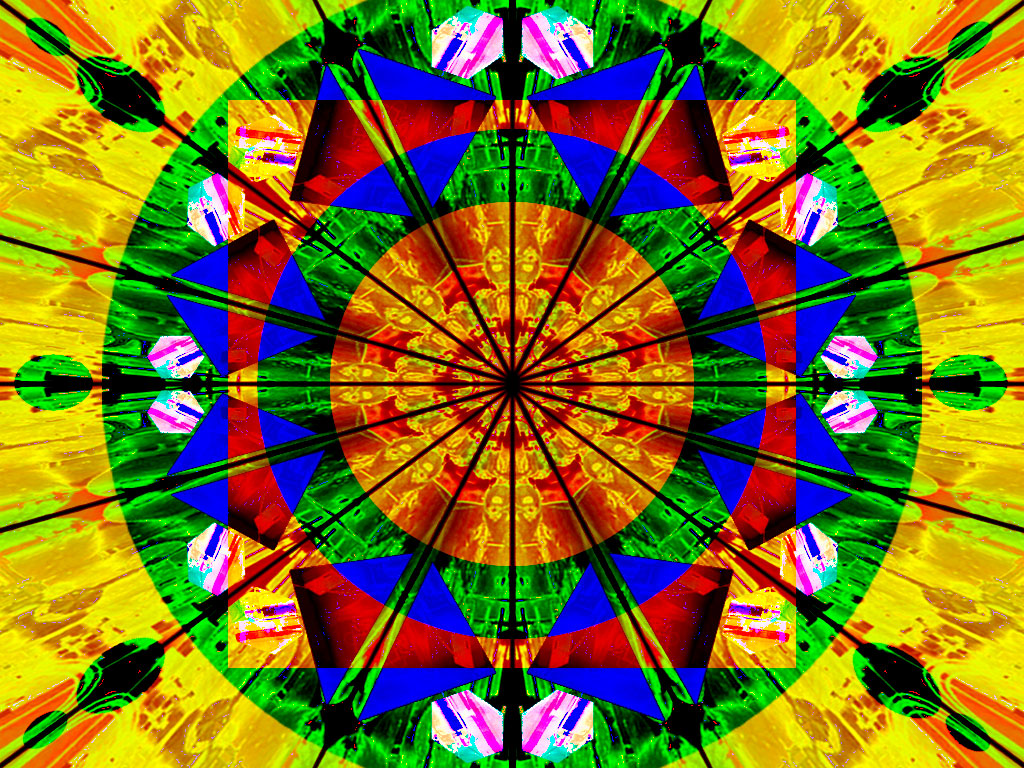
These mirrors are
symbols of the varying viewpoints which people have on any given issue. When you spin the kaleidoscope one way, you
see a certain picture and if you turn it even a smidge, it can alter the picture
dramatically.
When
drama would arise, there would be these different perspectives and then there
would be a wider perspective seen from an outsider of the argument. This is similar in regards to Plato’s
Allegory of the Cave because of the way someone outside of the cave has a very
different view of the cave then the prisoners who don’t know anything outside
of the cave. The third perspective is
actually the reader in this case because we know what is beyond the cave and we
also understand the prisoners’ view.
This
being said, what does that mean for those like the prisoners? Are we to tell them their views are wrong
because of what we know? According to
Plato, “reality” is not a specific thing.
It can be different for all people based on what they know. We can only know our reality and cannot speak
on anyone else’s views.

I agree with your mother's perspective of reality. I believe that this perspective applies when there is someone to blame. For example, when cars crash, there usually needs to be a bystander's view of the accident. This is because there is obviously two differing sides of the story; the driver's, and the true third side, the bystander's. When someone doesn't take part in the action at hand, they're perception of reality is usually correct.
ReplyDeleteI think that Plato has its similarities to your mother's theory. To answer your questions at the end, the prisoners aren't wrong. They have no prior knowledge of reality, all they know is how they "should" perceive reality. Therefore they don't know the truth, where two drivers know the truth yet they add their own twists to reality.
This can also be related to Rousseau's teachings. However, there is no third side. There is no "correct" definition of happiness, rather there is only our definition and Rousseau's definition. Therefore, your mother's quote doesn't apply to all of reality.
Everyone will have a different perception of reality and therefore we can't tell others that they are wrong for what they perceive. Thus, I completely agree with your last paragraph and Plato when he says that reality is not a specific thing.